
By Integrity Rodent Proofing, Dixon, California. Updated November 16, 2026
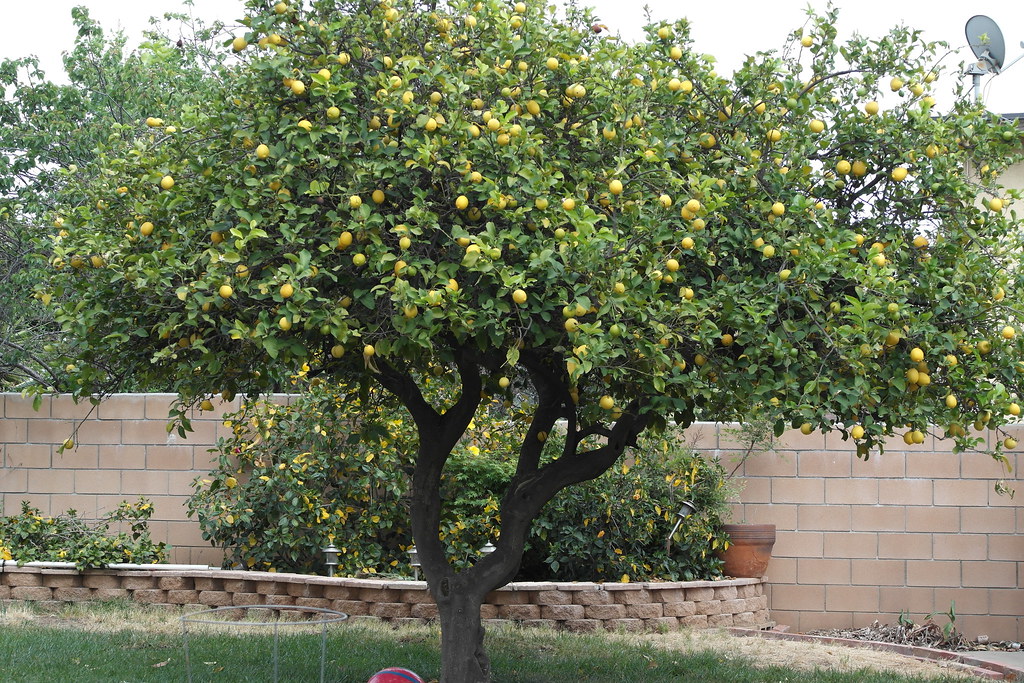
Photo: "the amazing giving lemon tree" by NancyFry, CC BY 2.0, via Flickr
Key takeaways
- Sudden yard rats have a cause with a date on it: something changed in the last few weeks, on your property or a neighbor's.
- The usual changes: a colony displaced by construction or a cleanup, a food source switching on, cover growing in, a water source.
- The food, water, and shelter that were always there explain why rats stay. The change explains why they came now.
- The signs confirm it: fresh burrows, runs along the fences, half-eaten fruit under the trees, a rat seen at dusk.
- A yard problem is usually the stop before a house problem. Sealing the house while the pressure is outside keeps it that way.
What changed: the sudden causes
Rats do not pick a yard at random: a colony that appears within a few weeks is responding to something that happened in those weeks. The first cause is displacement. Construction and teardown work destroys burrows and nesting cover, and the rats living there move to the nearest quiet ground, often next door. Around Dixon, Vacaville, and Fairfield, new subdivisions at the edge of established neighborhoods push field and roof rats into yards that never had them; a neighbor's teardown or tree removal does the same at single-house scale. The second cause is a food source switching on. Citrus and fruit trees feed nobody while the fruit is green; when it ripens and drops, the yard becomes a nightly feeding site, and a new feeder or pet food on the patio does the same. The third cause is cover growing in: shrubs and ivy along a fence become connected shelter, and a woodpile against the fence adds a dry, hidden base. The fourth is a water source: an irrigation leak, a dripping hose bib, a pet bowl left out; in a dry-summer climate, a steady leak is a beacon. The last cause is the season itself: cooling fall weather pushes rats toward warmth and reliable food, and yard activity rises. One cause on the list, not the whole explanation.
What was always there: why they stay
A change explains the timing; it does not explain the whole problem. Most valley yards offer some standing food, water, and shelter: a feeder up for years, a hedge never cut back, a shed with a gap at its base, a creek or canal corridor at the neighborhood's edge. Those conditions decide how many rats a yard can support, and a yard can sit there for years, rats passing through and never settling, until one change adds the missing piece. That is why the first question is "what changed."
Hearing scratching? Finding droppings?
Let's find out how they're getting in.
An entry-point inspection checks the common ways rats and mice get in, shows you what we find, and tells you what needs to be sealed.
The signs to check for
Walk the fence line first, where yard rats travel and the sign collects. Burrows are the strongest evidence: round holes two to four inches across with fresh, loose soil at the mouth, dug along fences, under sheds and decks. A burrow cluster means rats are living on the property, not visiting. Runs are next: paths worn through grass, along fences and walls between cover and food. Dark rub marks can appear where the fence meets a post or gate, left by coat oils at a point they pass nightly. Fruit hollowed out or half-eaten under a tree and gnawed rinds on the ground mean something feeds at night. Droppings along the fence line and near stored items confirm the traffic. Sightings grade the problem: a rat at dusk is a colony announcing itself; rats out in daylight usually mean a population too big, or too displaced, to wait for dark.
Why the yard is the stop before the house
Yard rats are not a separate problem from house rats; they are the earlier stage of the same one. A colony feeding and nesting in a yard tests the house. Roof rats travel fence tops and branches to the roofline, where a roof rat needs an opening only about the size of a quarter. Norway rats work low, along the foundation, at crawlspace vents and gaps under doors. Given a few undisturbed weeks, the colony finds the opening that exists. Treat it as a warning with time on it: the problem is outside and visible, and the house can be closed before the colony moves in.
What to do about it
The work splits in two. The homeowner's half is removing the change and lowering the pressure: pick up fallen fruit, take pet food in at night, secure bins and compost, fix the leak, cut cover back from the fence and house, and move woodpiles off the fence line. What it does not do is close the house: rats ranging in from a corridor or a neighbor's yard keep passing through even a clean yard, and any rat already inside stays inside. Our half is the house side. The inspection reads yard sign and house together: where the burrows and runs point, and where the roofline, vents, foundation, and crawlspace stand open. Openings get sealed with construction grade materials, at ground level and along the roofline. If rats are already inside, the order is: seal the openings first, clean and sanitize at the same visit, trap what is still inside, and run follow-up checks until there are no more signs of activity. Nobody can promise a yard will never see another rat; the ground around it is not ours to seal. What can be closed, and kept closed, is the house. The inspection is free.
Rat work in our service area
Common questions
Why are there suddenly rats in my yard?+
Because something changed in the last few weeks, on your property or a neighbor's. The cause is usually recent, and findable.
My neighbor is building an addition. Could that send rats my way?+
Yes, it is the classic sudden cause: displaced colonies move to the nearest quiet ground, usually the next yard over.
Will rats in the yard get into my house?+
They can, and a settled colony usually tries. Roof rats reach the roofline along fences and branches and need an opening about the size of a quarter. Norway rats test the foundation, vents, and door gaps. Sealing the house is what keeps a yard problem outside.
If I clean up my yard, will the rats just leave?+
Cleanup lowers the pressure and is worth doing, but it does not close the house, and rats from nearby habitat keep visiting tidy yards. Cleanup handles the welcome; sealing handles the house.
Does seeing a rat in the daytime mean the problem is bad?+
Usually the population is big, or newly displaced and feeding under pressure. Repeated daytime sightings point to an established colony; a single rat at dusk is the earlier warning.
Written by
The Integrity Rodent Proofing team
Dixon, California. Rodent-proofing specialists serving homes across Solano, Yolo, Sacramento, Napa and Placer counties. We find how rats and mice are getting in, explain what we find, and seal the openings.