
By Integrity Rodent Proofing, Dixon, California. Updated November 6, 2026
Key takeaways
- Rodent work is a specialist trade, not a monthly spray route with a rodent page.
- Judge the inspection: full house coverage, photos of findings, an estimate at the end.
- Trapping and proofing (exclusion) are two different jobs. A good proposal separates them and prices each one.
- Compare written scopes, follow-up visits included, not headline prices.
- Whatever backing a company offers, get it in the paperwork.
Hire the specialist, not the schedule
Most pest control companies make their money on monthly routes: a technician with a sprayer, ants and spiders and a bait station by the garage. Rodent work is a different trade. It is ladders and roofline work, attic time, and sealing a house the way you would weatherproof it. If the rodent offer is a monthly program, traps checked on a route and bait refilled, you are looking at a generalist renting you a subscription. If the offer starts with an inspection and ends with a written plan to close the house, you are looking at a rodent company. A rat in the attic is a construction problem with an animal in it, and the company you want is the one that treats it that way.
The inspection is the interview
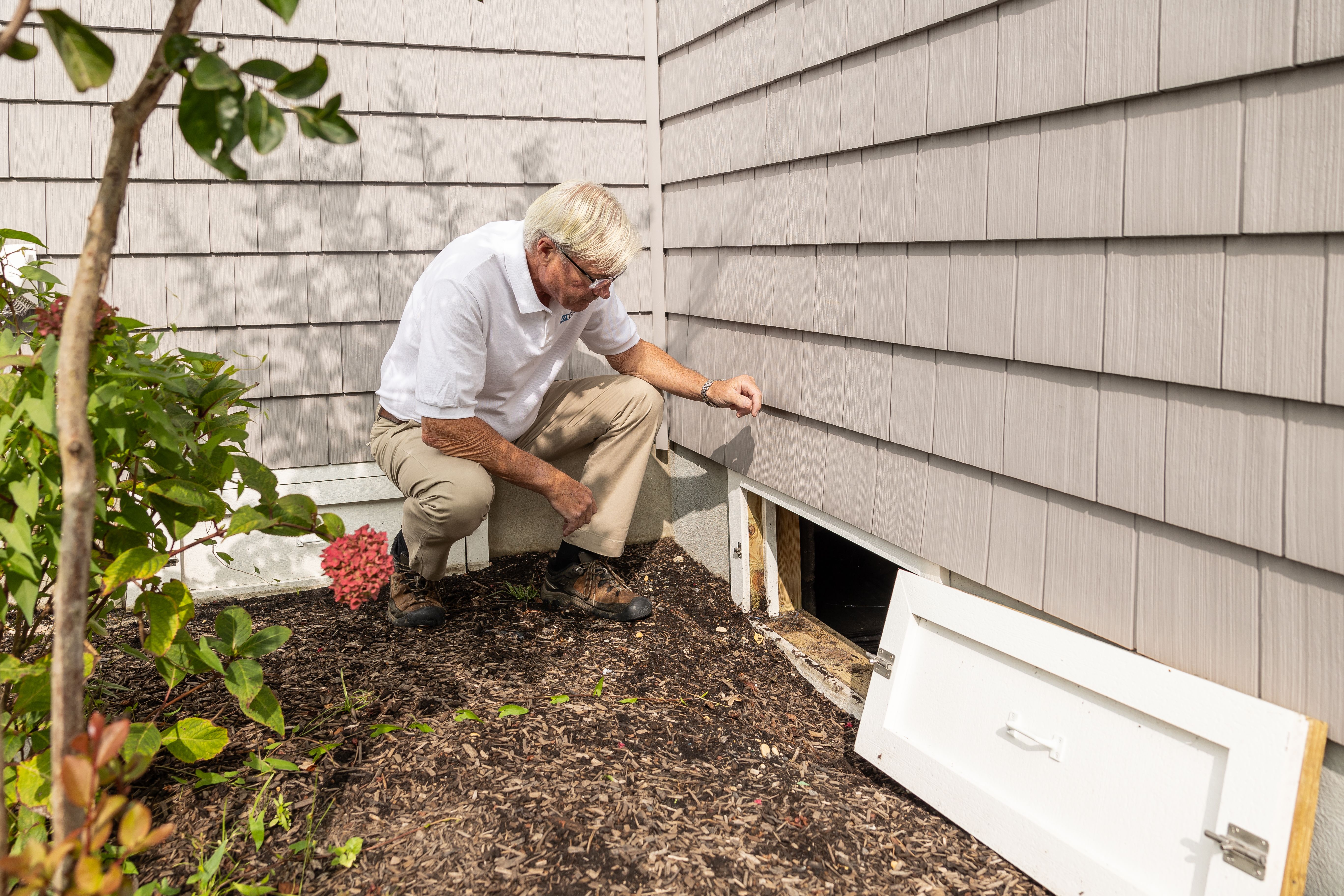
A real rodent inspection covers the roofline, the attic, the garage, and the full outside of the house. The inspector is reading evidence while he looks: droppings, which say rats or mice and where they travel; gnaw marks; grease marks along the runs; nesting in insulation, then maps the openings the evidence points to. A thin inspection lasts ten minutes, never gets into the attic, and produces a price on the spot or, worse, over the phone before anyone has seen the house. A real one takes time, produces photos of what was found, and ends with an estimate that lists the work. Three questions expose which one you are getting. Which areas will you inspect, and which can you not get to? What did the droppings and damage say about what is in there? Will the findings be in writing, with the openings listed? A company that cannot answer the first two has not looked yet. A company that will not do the third is asking you to trust a sales pitch. Our inspection has a name, the IntegrityCheck: free, with photos of what we find, and an estimate at the end.
Hearing scratching? Finding droppings?
Let's find out how they're getting in.
An entry-point inspection checks the common ways rats and mice get in, shows you what we find, and tells you what needs to be sealed.
Proofing and trapping are two different jobs
Trapping removes the rodents that are already inside your house. Proofing, also called exclusion, closes the openings they used to get in. They are not the same work, and a price that sounds low often covers only one of them. Traps alone never finish a rodent problem. They catch what is in and leave every door standing open, so the house refills. Sealing alone has the opposite hole in it: the house is closed with the rodents still inside it. The order that works is seal first, clean and sanitize, then trap what is left inside, with checks until the traps stay empty, and a final clean-up pass at the end. So when a proposal lands, find the line where each job lives. Which openings get sealed, in so many words? How many traps, where, and who checks them? If the proposal just says "rodent control" with one number under it, you do not know what you bought.
Read the written scope
Two companies can quote very different prices for what sounds like the same job, and the written scope is where the difference hides. The openings should be named in it. Read for the rest: areas excluded, stated plainly instead of discovered later; what the clean-up covers, a spot clean or a full attic clean-out when the insulation is ruined; and the follow-up, how many return visits, over how long, and whether they are in the price or sold later. Follow-up is the line homeowners skip and then pay for. Our proofing jobs carry three follow-up visits over about three weeks at no additional charge: traps checked and reset, anything caught removed, and the sealing work looked over again. Get any company's version of that in writing, in the estimate. How long the whole job runs, and what stretches it, is its own question: see how long rodent proofing takes.
Read the backing in the paperwork
The sentence that counts is the one in the estimate or contract: what happens if the scratching comes back, how long that promise runs, and what it actually covers, the whole house or just the spots that were sealed. Read that part before you sign. If the backing is a headline on the website and nothing in the paperwork, it is a headline. Missed openings happen in this trade; the paperwork is where you find out what the company does about one.
If you would rather skip the interviews
Run the checks above on us, too. Integrity Rodent Proofing is licensed and insured, we do not use poison, and the work runs in the order this guide describes: the IntegrityCheck inspection, proofing, clean-up and sanitation, then follow-up and trap checks. The inspection is free, and it ends with the estimate that lets you compare us against anyone. Call (707) 754-2408.
Common questions
Is rodent proofing the same as rodent exclusion?+
Yes. Two names for the same work: finding the openings rats and mice use to get in and sealing them. Some companies say proofing, some say exclusion. What matters is that the proposal lists which openings are included.
Should a rodent exterminator use poison?+
Ask any company what it uses and why. Poison kills rodents without closing a single opening, and a poisoned rat often dies inside a wall, where the smell lasts for weeks. We do not use poison.
Can I just hire someone to set traps?+
You can, and for a single mouse in a pantry it can be enough. For ongoing activity it manages the problem instead of ending it: the traps keep catching and the openings keep admitting. Trapping does its real work inside the full order: seal, clean and sanitize, then trap what is left.
Do I need to leave my home during rodent proofing?+
No. The work happens on the roofline, in the attic, and around the outside of the home, and none of it uses poison. We need attic and yard access; you and your pets can be home the whole time.
Should I get more than one estimate?+
Yes, if you can. Two or three estimates show you how differently companies define the same job. Compare what each one actually lists: the openings named, whether trapping and clean-up are in or separate, and how many follow-up visits are included. The cheapest number with the thinnest scope is usually the expensive one in the end.
Written by
The Integrity Rodent Proofing team
Dixon, California. Rodent-proofing specialists serving homes across Solano, Yolo, Sacramento, Napa and Placer counties. We find how rats and mice are getting in, explain what we find, and seal the openings.