
By Integrity Rodent Proofing, Dixon, California. Updated November 9, 2026
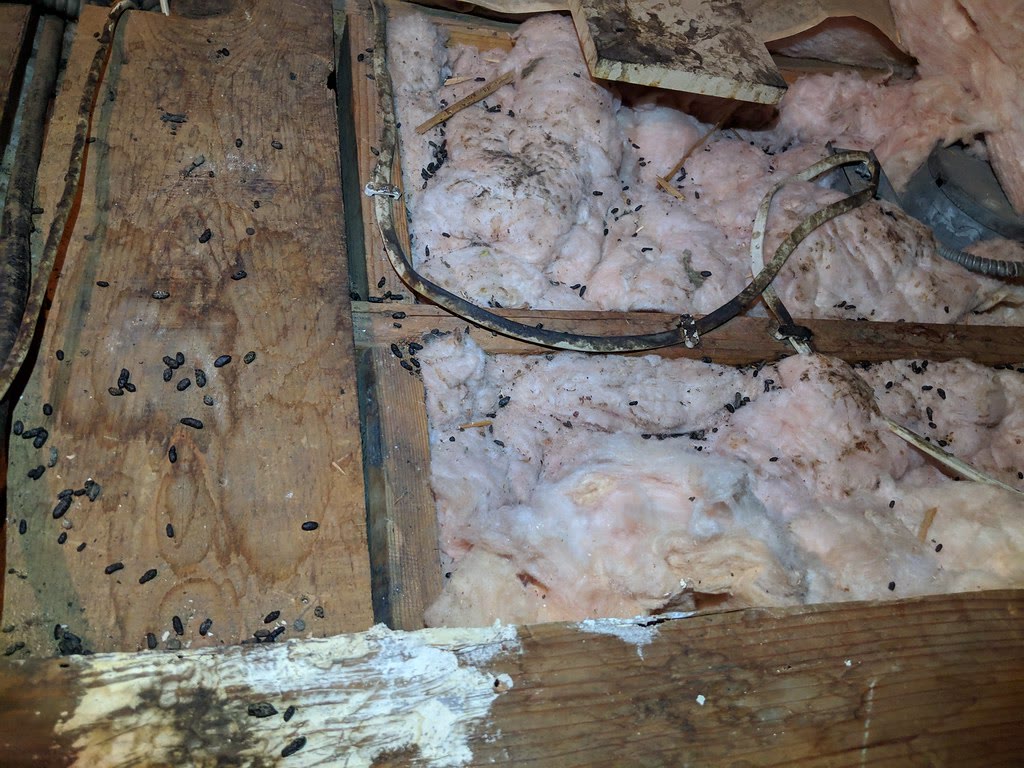
Photo: "Rodent droppings in an attic" by Eco Bear Biohazard Cleaning Co., CC BY 2.0
Key takeaways
- Scratching in the attic at night is usually a rodent, and rats and mice are both night animals. The sound is them moving, climbing, and gnawing after dark.
- Timing and location narrow it down. Noise overhead at night points to the attic; noise low in a wall points to the crawlspace or the base of the house. Daytime noise is a different list.
- A sound is a clue, not a proof. Scratching tells you where to look, not which animal it is. The droppings, rub marks, and openings found on an inspection are what settle it.
- Some attic animals are not our work. Squirrels, raccoons, bats, and birds in vents are wildlife jobs, and we will tell you plainly if that is what your signs point to.
- Sometimes it is not an animal at all. Pipes, ductwork, and a branch on the roof all make night noises, and an honest inspection rules them out instead of selling you a job.
What the sound is telling you
Start with two questions: when, and where. Rodents are nocturnal, so a rodent problem announces itself after dark, often in the first hours of the night and again before dawn, when the animals move between the nest and their food and water routes. Daytime attic noise is a shorter list, and it mostly is not rats. Where pins it down further. Noise overhead, moving across the ceiling, is attic activity. Scratching inside a wall means something is traveling the wall void, down from the attic or up from the crawlspace. Sounds that stay low, under the floor or at the base of a wall, point at the crawlspace and the ground-level animal. Light, fast scratching is usually mice; heavier scurrying and steady gnawing is more rat-sized. None of this is proof on its own. It is how we decide where to look first.
Matching the sound to the animal, honestly
Rats and mice are the common night call, and they are our work. Roof rats live in the attic and travel the roofline, so their noise sits overhead. Norway rats work the ground, so their noise sits low, in the crawlspace or the bottom of a wall. Mice are lighter and quicker than either, and their scratching often shows up inside kitchen and bathroom walls. The rest of the usual suspects are not rodent proofing jobs, and we say so. Squirrels are daytime animals; scratching and rolling overhead in the morning and afternoon is squirrel until proven otherwise. Raccoons are heavy: slow thumps and dragging overhead at night, much louder than any rat. Bats are quiet and seasonal, faint fluttering and chirping from a wall or vent in the warm months. Birds in a vent chirp in daylight and go quiet at night. If your signs point to one of those, the honest answer is a wildlife company, not a sealing job.
Hearing scratching? Finding droppings?
Let's find out how they're getting in.
An entry-point inspection checks the common ways rats and mice get in, shows you what we find, and tells you what needs to be sealed.
Where the noise leads
The animal making the noise got in somewhere, and the opening is the actual problem. Attic noise usually traces back to the roofline: vents with failed screens, gaps at the eaves, and openings where pipes and wires come through. Wall noise traces to those same entries, because the wall void is the road between the attic and the rest of the house. Low noise traces to the base: crawlspace openings, foundation gaps, and vents low on the walls. That is why the fix is never just removing the animal you hear. Trap what is inside without sealing, and the next animal uses the same opening. The opening has to close.
What we do about it
Every noise call starts with a free inspection, and its job is to turn a sound into evidence. We check the attic, the roofline, the crawlspace, and the walls the noise came from, looking for droppings, rub marks, nesting, and the openings themselves. You get photos of what we find. The estimate that follows spells out the openings, the work, and the full cost before you decide anything. The work runs in a set order. First we seal the entry points, closed with construction grade materials, so nothing new gets in. On the same visit we clean and sanitize where the rodents have been living. Then we trap what is still inside. Follow-up visits continue until there are no more signs of activity, and a quiet house at night is one of the signs we check. No poison at any step: poison does not close an opening, and it can leave a dead animal in the wall, a worse noise problem than the one you called about.
When it is probably not an animal at all
Houses make their own night noises. Hot water pipes tick and knock as they expand and cool, and the sound can travel through a wall and read as scratching. Heating and cooling ducts pop as the metal warms and cools. A tree branch brushing the roof in the wind keeps a rhythm that sounds like something moving up there. The difference is pattern. An animal moves, stops, gnaws, and changes location; a pipe repeats in the same spot, tied to the furnace or water running, and a branch follows the wind. If an inspection finds no droppings, no rub marks, no nesting, and no openings, we will tell you the noise is most likely the house itself, and there is no job to sell you. Our guide to what a rodent inspection covers walks through the visit area by area, from the attic to the crawlspace to the outside shell.
Common questions
What does scratching in the attic at night usually mean?+
Usually a rodent. Rats and mice are night animals, and the attic is where roof rats and mice nest, so the scratching is them moving, climbing, and gnawing after dark. It can be other animals, and sometimes it is the house itself. The inspection finds the signs and settles which one it is.
How can I tell if the noise is rats, mice, or something else?+
By weight, timing, and place. Mice are light and fast, with scratching that often shows up low in kitchen and bathroom walls. Rats are heavier, with scurrying and gnawing overhead or under the floor. Daytime noise points away from rodents, toward squirrels or birds, and heavy slow thumping at night sounds more like a raccoon, which is not our work. Droppings and rub marks found on the inspection are the real answer.
Why is the scratching louder at night than during the day?+
Two reasons. Rats and mice are nocturnal, so night is when they move between the nest and their food and water routes. And the house is quiet at night, with no television, traffic, or appliances covering the sound. The activity may be there at dusk too; you just hear it once everything else stops.
I hear scratching inside the walls, not the ceiling. Where are they?+
Most likely traveling the wall void. The hollow inside a framed wall runs from the attic down to the crawlspace, and rodents use it as a road, which is why wall noise often comes with attic or crawlspace signs. The openings are still at the roofline or the base of the house; the wall is just where you hear them pass. Sealing the entries is what ends the wall noise.
When should I call for an inspection about noises in the attic?+
When the noise repeats on more than one night, when it is joined by any other sign (droppings, a smell, chewed material), or when it is getting louder or spreading to new spots. One odd sound can be the house settling. A pattern is an animal with a route, and the sooner the entries are found, the smaller the sealing job usually is. Inspections are free and you get photos of what we find, so there is no cost to finding out.
Written by
The Integrity Rodent Proofing team
Dixon, California. Rodent-proofing specialists serving homes across Solano, Yolo, Sacramento, Napa and Placer counties. We find how rats and mice are getting in, explain what we find, and seal the openings.