
By Integrity Rodent Proofing, Dixon, California. Updated November 8, 2026
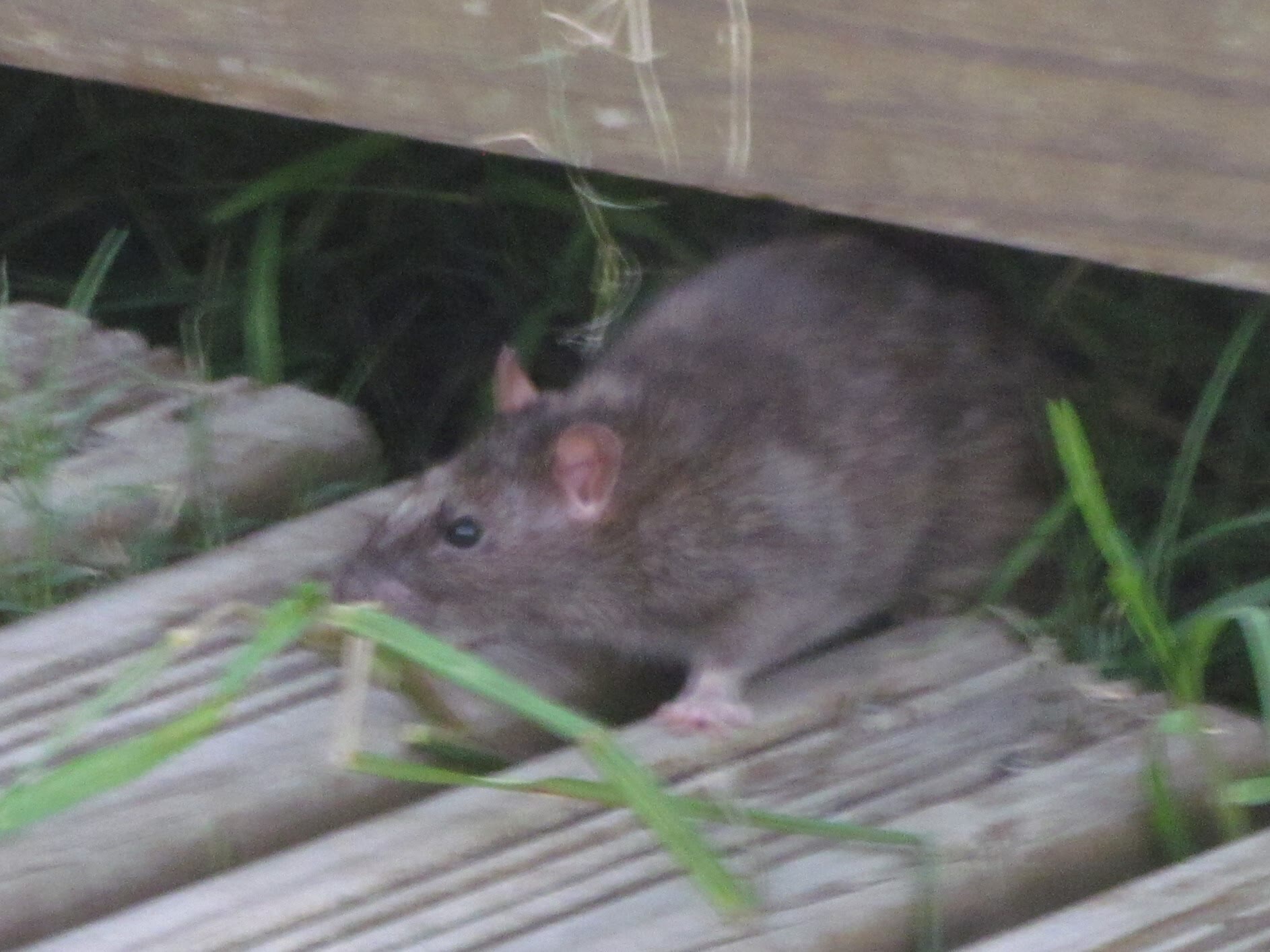
Photo by Naelin via iNaturalist, CC BY 4.0
Key takeaways
- Norway rats are ground animals. The signs sit low: burrow holes along the foundation, rub marks at ground level, droppings in the garage and crawlspace, nothing overhead.
- They are diggers. A Norway rat burrows along foundations, under slab edges and steps, and through the soft ground at the base of the house.
- The entries are at the base of the house: foundation gaps, crawlspace openings, and vents low on the walls.
- The fix is sealing, not poison: seal the ground-level openings first, clean and sanitize on the same visit, then trap what is still inside.
- If rats have tunneled under the foundation, sealing the surface is not the whole fix. The real fix is a concrete rat slab, and that part gets referred out.
How to tell it is Norway rats
A Norway rat is the bigger, heavier rat: stocky, blunt-nosed, built for digging instead of climbing. Around the house we find burrow holes along the foundation with fresh dirt at the mouth, rub marks low on walls where the rats run the same paths every night, and droppings in the garage, the crawlspace, and along the base of the house. From inside, the sounds sit low too, in the crawlspace or the bottom of a wall. Nothing overhead. Two animals get confused with them. Roof rats are the slender climbers; their signs are in the attic, not at the foundation. Mice leave the same kinds of signs in miniature, with droppings like grains of rice, and they do not dig burrows. Telling them apart matters because the entries sit in different places. The inspection settles which animal it is before any work is quoted.
How Norway rats get in
Norway rats come at the base of the house. They work the foundation line looking for the gap that gives: where pipes come through low, where the foundation meets the siding, crawlspace openings and vents with torn screens, and gaps under steps, porches, and garage doors. A gap does not have to look like much. If a Norway rat can get its head through, the rest of it follows. The other way in is digging. Norway rats burrow along the edges where ground meets house, under slab edges, walkways, and steps, and they will dig down alongside a foundation to come up under it. That is the tunneling case. A torn crawlspace screen is a sealing job; ground tunneled out under the foundation is a different problem, and it gets named on the inspection, not covered over.
Hearing scratching? Finding droppings?
Let's find out how they're getting in.
An entry-point inspection checks the common ways rats and mice get in, shows you what we find, and tells you what needs to be sealed.
Concrete, slabs, and tunneling
Not solid concrete. A rat cannot chew through a sound, cured slab or foundation wall. Cracked, crumbling, or poorly cured concrete is a different story, and so is mortar. Rats work the weak spots: the joints where concrete sections meet, edges already flaking, and the soft material packed around pipes where they pass through. The bigger problem with a slab is not chewing through it. Norway rats dig. They burrow under slab edges, walkways, and porches, hollowing out the ground underneath until a run passes below the foundation and up into the crawlspace. That is tunneling, and it changes the job. We check the crawlspace on every inspection, and entry points get sealed unless the ground has been tunneled. Where tunneling has undermined the foundation, the real fix is a rat slab, a concrete cap poured over the tunneled ground, and that part gets referred out. We do not pour slabs. Our guide to what rats can chew through covers concrete, block, mortar, and the other materials around a house in full.
Where we see Norway rats
Norway rats follow open ground and old foundations. Dixon is home ground for them: barns, outbuildings, and rural edges on every side of town, with burrows along foundations and under sheds. Woodland runs the same way, an agricultural town with older foundations and farm ground at its edges. Winters sits surrounded by orchards and rural ground, and its Norway rats work the base of the older in-town homes from that ground. Vacaville has them on the rural fringe and in the older ground-level neighborhoods. Fairfield shows them in its older core foundations and out toward the agricultural valley edges. West Sacramento's river and port ground, with its older ground-level housing, is steady Norway rat territory. In Sacramento it is the older ground-floor housing stock and the alley ground behind it. Davis is known for roof rats in its canopy, but along the greenbelts and in the ground-floor units, the ground-level rat is the Norway rat. And American Canyon's newer subdivisions back onto open rural ground, so the rats are working the foundations before the landscaping is in.
How we get Norway rats out
Every job starts with a free inspection. We walk the foundation line, check the crawlspace, and take photos of the openings and burrows we find. The estimate that follows spells out the work and the full cost, so you see exactly what would be sealed and what it runs before you decide anything. The work runs in a set order. First we seal the ground-level openings: the foundation gaps, the crawlspace openings, and the vents, closed with construction grade materials. That sealing is the core of the job. On the same visit we clean and sanitize the areas the rats have been in. Then we trap the rats still inside. Follow-up visits continue until there are no more signs of activity. No poison is used at any step. Poison never closes a burrow or a foundation gap, and the next rats use the same holes. One case is different, and we say so up front. Where rats have tunneled under the foundation itself, sealing the surface openings does not fix the ground underneath. The real fix there is a rat slab, a concrete cap poured over the tunneled ground, and we do not pour rat slabs. If your inspection shows tunneling, we will show you what we found and refer that part out.
Keeping Norway rats out
The yard side is yours, and it helps. Move woodpiles and debris away from the foundation, and stack firewood off the ground. Keep ground cover and brush cut back from the base of the house so the rats lose their covered run to the wall. Store pet food, bird seed, and animal feed in sealed containers instead of open bags in the garage. What yard work cannot do is close an opening or fill a tunnel. A clear foundation line makes Norway rats easier to spot; a sealed crawlspace vent stops them. If you start seeing fresh dirt at the base of the house or new holes along the foundation, an entry is open or digging has started, and it is worth an inspection before the burrows are established.
Norway rat work in our service area
Common questions
How does Norway rat control differ from roof rat control?+
Norway rat control works at ground level: burrows along the foundation, gaps at the base of walls, and crawlspace openings, instead of the roofline. The order of work is the same. We seal the openings first, clean and sanitize, then trap the rats still inside and follow up until the activity stops. No poison is used.
Do you offer Norway rat removal, or just trapping?+
Norway rat removal here means the whole job, not a trap line. We seal the ground-level openings and burrow entries the rats are using, clean and sanitize the areas they have been in, and trap what is still inside, with follow-up visits until there are no more signs of activity.
Can you seal rats out of a crawlspace?+
Yes. Crawlspace openings are a main Norway rat entry, and sealing them is core proofing work. We inspect the crawlspace on the inspection, and entry points down there get sealed as long as the ground has not been tunneled. Where rats have tunneled under the foundation, the real fix is a rat slab, and we will tell you plainly that part gets referred out.
Is a rat exterminator the right call for burrows along my foundation?+
A rat exterminator will usually set poison for burrow rats, and the burrows and foundation gaps stay open for the next ones. Our work starts with a free inspection of the foundation line and crawlspace, with photos of what we find. The job itself is sealing the openings first, then cleaning up where the rats have been and trapping what is still inside, done by a licensed and insured crew, with no poison.
What are the signs of Norway rats, not roof rats?+
Norway rats show up low: burrow holes along the foundation or under sheds and woodpiles, rub marks at ground level, droppings in the garage or crawlspace, and activity that never gets overhead. Roof rats are the attic animal. If the signs sit at ground level, Norway rats are the likely animal, and the free inspection settles which one it is.
Can a rat chew through concrete?+
Not solid, cured concrete. A sound slab or foundation wall is more than a rat can chew. Cracked and crumbling concrete, mortar, and the joints and soft fill around pipes are another story. Most of the time the slab problem is not chewing at all. Norway rats tunnel under slab edges and up into the crawlspace, and tunneling needs a rat slab, which we refer out.
Written by
The Integrity Rodent Proofing team
Dixon, California. Rodent-proofing specialists serving homes across Solano, Yolo, Sacramento, Napa and Placer counties. We find how rats and mice are getting in, explain what we find, and seal the openings.