
By Integrity Rodent Proofing, Dixon, California. Updated October 2026
Key takeaways
- Roof rats climb in from trees, fences, and rooflines, not just the ground
- A rat can fit through a hole about the size of a quarter
- Vents, coves, eaves, and utility openings are the usual suspects
- Traps remove rodents; only sealing the openings keeps them out
How do rats get into attics in the first place?
Roof rats are strong climbers. In Dixon, Davis, and Vacaville they travel branches, fences, and utility lines to the roof, then probe the roofline for gaps. A rat can squeeze through a hole about the size of a quarter. Trimming branches back removes the easy bridge, but the openings still have to be sealed.
The roofline is where most entries start
Coves, eaves, soffits, roof-to-wall transitions, and tile edges are the spots we find open most often, and most are hard to see from the ground. On the older ranch and midcentury homes common around here, open eaves are a classic entry, especially with a tree or fence nearby.
Hearing scratching? Finding droppings?
Let's find out how they're getting in.
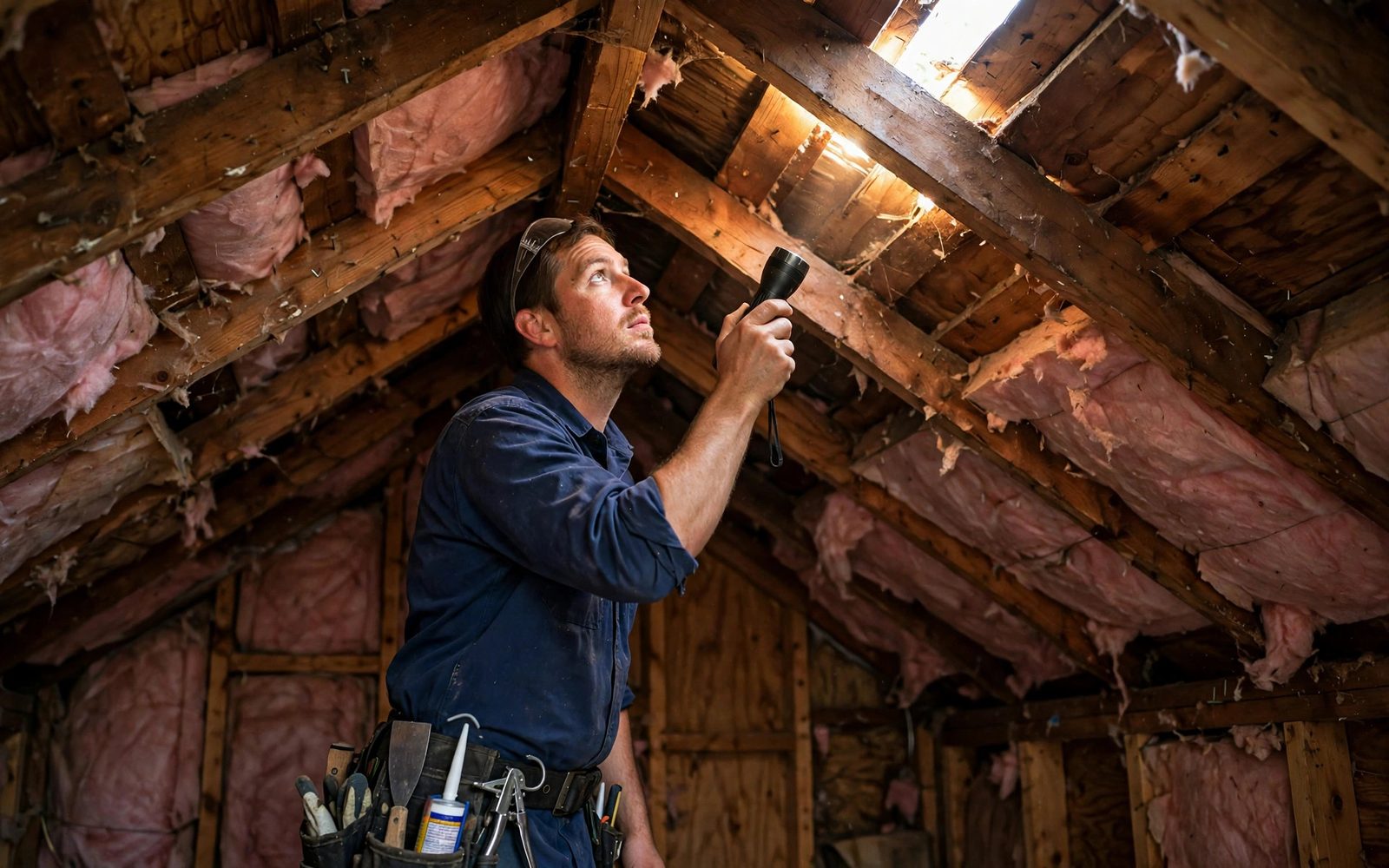
An entry-point inspection checks the common ways rats and mice get in, shows you what we find, and tells you what needs to be sealed.
Can roof vents let rats into an attic?
Yes. A vent with a loose, missing, or damaged screen is a direct path into the attic, and the assembly or the transition around it often has gaps of its own. Proofing a vent means securing it without blocking airflow.
Rats can enter low and travel up inside the walls
Not every attic rat came through the roof. Utility penetrations, garage openings, and connected wall spaces can carry rodents upward, even when the first sign is in the attic. Droppings up there do not always point at the real entry. A good inspection starts outside and works in.
What to do when you hear scratching at night
Night scratching, droppings along attic beams, rub marks, or nesting material all mean act soon. Traps can remove the rodents you hear, but they do not close the opening, so the cycle repeats. An entry point inspection checks the roofline, vents, garage, utilities, and foundation.
Common questions
How do I know if it's rats in the attic and not something else?+
Night scratching or scurrying usually means rats or mice. Dawn and dusk noise is more often squirrels. Droppings along attic beams confirm rodents.
How small of a hole can a rat fit through?+
About the size of a quarter. Mice need even less, roughly a quarter inch.
Will trimming tree branches keep rats out of my attic?+
It removes their bridge, but it does not seal anything. Do both.
Should I put traps in the attic before sealing the entry points?+
No. Seal first, then trap the ones still inside.
Written by
The Integrity Rodent Proofing team
Dixon, California. Rodent-proofing specialists serving Dixon, Davis, Woodland, Winters, Vacaville, West Sacramento, Sacramento, Roseville, and Folsom. We find how rats and mice are getting in, explain what we find, and seal the openings.