
By Integrity Rodent Proofing, Dixon, California. Updated October 2026
Key takeaways
- Droppings confirm activity but do not reveal the entry points
- Full insulation replacement should never be automatic
- Chewed wiring is a fire risk, and insurance rarely covers rodent damage
- Seal first, then clean; never the other way around
What droppings tell you, and what they do not
Droppings confirm activity and show where rodents have been. Fresh droppings are dark and moist; old ones are dry and crumbly. What droppings cannot do is show you the entry points. That takes an inspection of the roofline, vents, garage, and foundation.
Roof rat or mouse? A quick identification
Roof rat droppings are about half an inch long and spindle shaped. Mouse droppings are smaller, about a quarter inch with pointed ends. Norway rat droppings are blunter. Which rodent you have shapes the trapping plan and the entry points that matter.
Hearing scratching? Finding droppings?
Let's find out how they're getting in.
An entry-point inspection checks the common ways rats and mice get in, shows you what we find, and tells you what needs to be sealed.
Not every attic needs a full clean-up
A few droppings may need far less work than a heavily contaminated attic. Clean-up should match what is actually there, not a one-size package.
When insulation removal makes sense
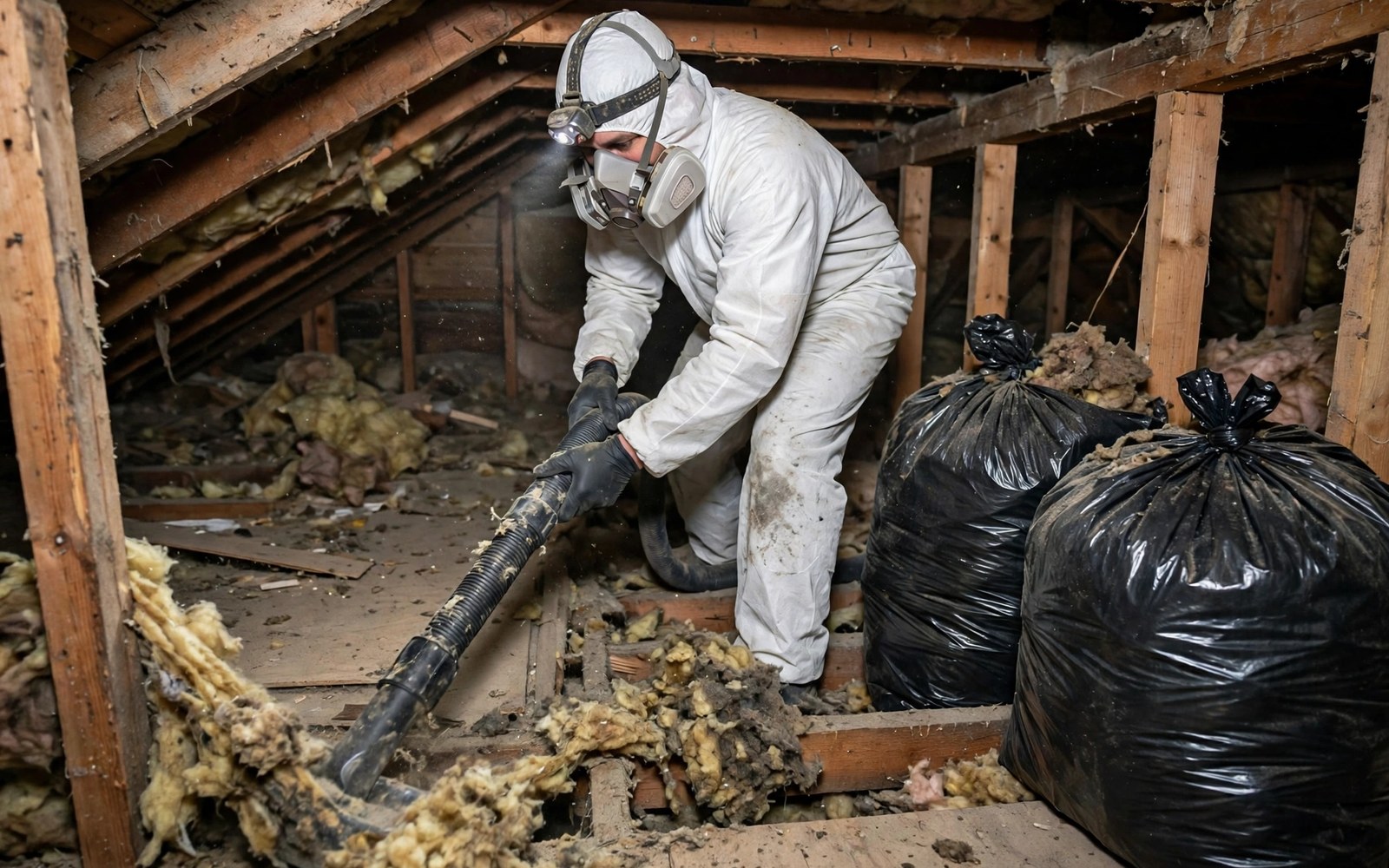
Insulation that is heavily soiled, compressed into nesting, or saturated with urine usually needs to come out. It holds odor and contaminants. Light, scattered droppings often do not justify a full replacement. Replacement is a separate decision from proofing, never automatic.
The cost of waiting too long
Rodents gnaw constantly because their teeth never stop growing, and chewed wiring is a real fire risk. They shred insulation and can contaminate ductwork. Homeowners insurance usually treats rodent damage as a maintenance issue, not a covered claim, so the bill lands on the homeowner.
How clean-up fits with proofing
The order matters. We seal the openings first, and clean and sanitize at the same time, which is when most of the clean-up happens. Then we trap the rodents still inside. If anything needs cleaning after trapping, we clean it then. Cleaning without sealing leaves the same access open.
Common questions
Are rodent droppings dangerous?+
They can carry pathogens. Do not sweep or vacuum dry droppings, which puts dust in the air.
Do I have to replace all my attic insulation?+
Not automatically. Heavily soiled or urine-saturated insulation usually needs to come out. Light, scattered droppings often do not justify it.
Will homeowners insurance cover rodent damage?+
Usually not. Most policies treat rodent damage as a maintenance issue rather than a covered claim.
Should I clean the attic before or after sealing entry points?+
With the sealing. The order is inspect, seal and clean, then trap, and anything left gets cleaned after trapping. Cleaning first on its own just prepares a fresh attic for the next rats.
Written by
The Integrity Rodent Proofing team
Dixon, California. Rodent-proofing specialists serving Dixon, Davis, Woodland, Winters, Vacaville, West Sacramento, Sacramento, Roseville, and Folsom. We find how rats and mice are getting in, explain what we find, and seal the openings.