
By Integrity Rodent Proofing, Dixon, California. Updated October 2026
Key takeaways
- Damaged vent screens are a direct path into the attic
- Never seal a working vent solid; screen it and keep the airflow
- Match the screening and fastening to the vent type and roof
- Inspect flashing, coves and transitions around suspect vents
Can rats and mice enter through roof vents?
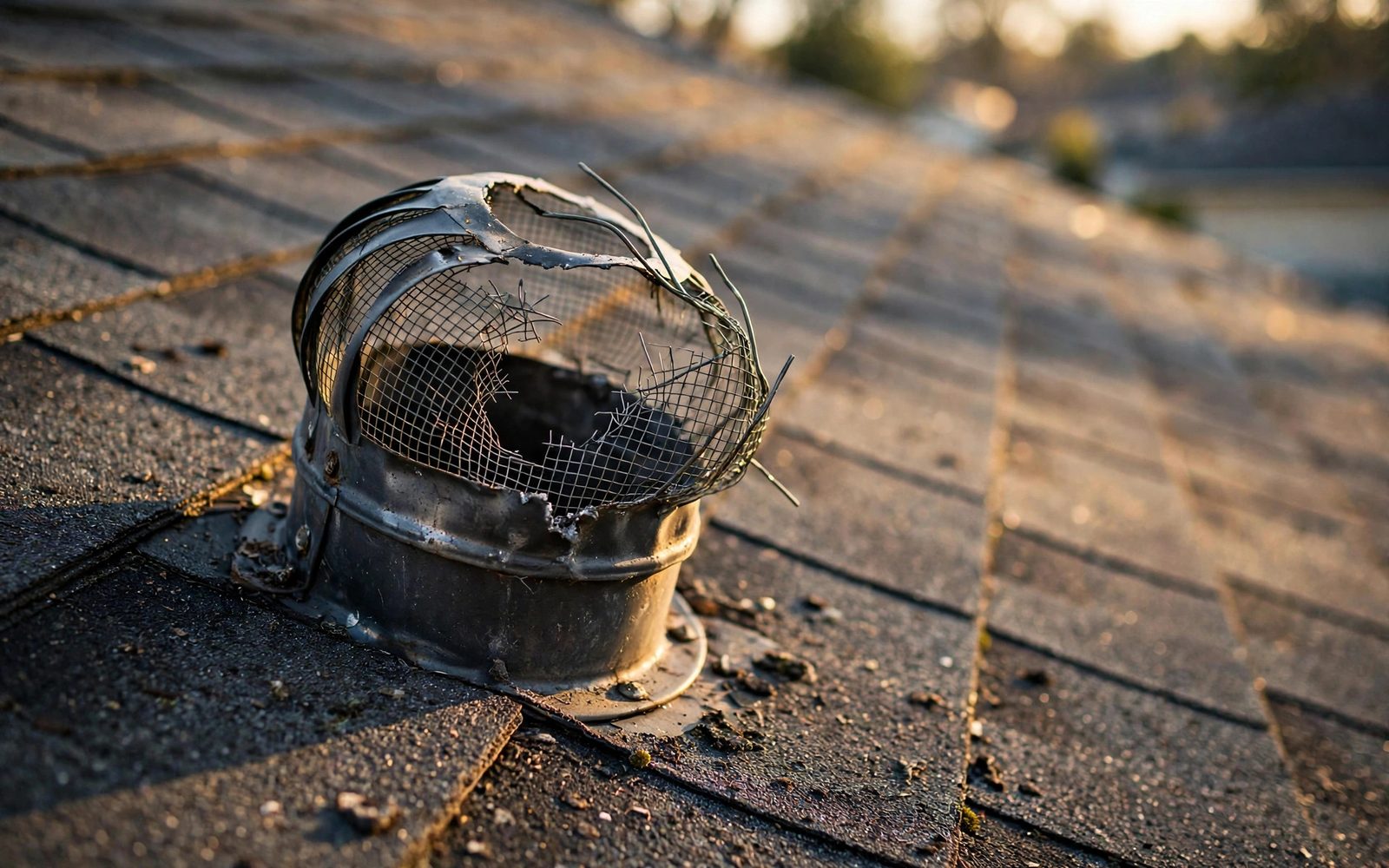
Yes, and it is one of the more common entries we find. A loose, missing, or damaged screen is a direct path into the attic, and the assembly or transition around it often has gaps of its own. Gable vents, turbine vents, and older bonnet-style vents are frequent culprits, especially when the original screening has rusted or pulled loose.
Which vents should you check first?
Start with damage visible from the ground: bent louvers, missing screen sections, daylight around a vent base. In the attic, look for droppings, rub marks, or nesting near vent openings. Check bath fan and dryer terminations too; those are often sealed with nothing more than caulk.
Hearing scratching? Finding droppings?
Let's find out how they're getting in.
An entry-point inspection checks the common ways rats and mice get in, shows you what we find, and tells you what needs to be sealed.
Vent proofing has to preserve airflow
Never seal a working vent solid. Attics need ventilation to manage heat and moisture, and blocking it creates new problems. Proper proofing covers the opening with construction grade materials, fastened so it stays put. Foam or caulk alone will not hold on a vent rats are already using.
The repair depends on the vent and the roof
The fix fits the vent and the roof. A turbine vent on a composition roof gets a different repair than a gable vent on stucco or a pipe flashing on tile, and the vent has to keep working afterward.
Check the area around the vent, not just the vent itself
Activity near a vent does not always mean the vent is the only opening. Check the flashing, coves, roof-to-wall transitions, and tile edges nearby. A vent-only fix that misses the gap six feet away is a fix that fails.
Common questions
Can I just seal my roof vents shut to keep rats out?+
No. Attics need ventilation. Screen the vent instead: construction grade screening keeps rodents out and the vent keeps breathing.
What should vents be screened with?+
Construction grade materials, fastened around the full opening. Foam or caulk alone is not enough.
How can I tell if a vent is actually the entry point?+
Look for droppings, rub marks, or nesting near the vent in the attic, and check the screen for damage or gaps. Then check the flashing around it.
Written by
The Integrity Rodent Proofing team
Dixon, California. Rodent-proofing specialists serving Dixon, Davis, Woodland, Winters, Vacaville, West Sacramento, Sacramento, Roseville, and Folsom. We find how rats and mice are getting in, explain what we find, and seal the openings.