
By Integrity Rodent Proofing, Dixon, California. Updated November 20, 2026
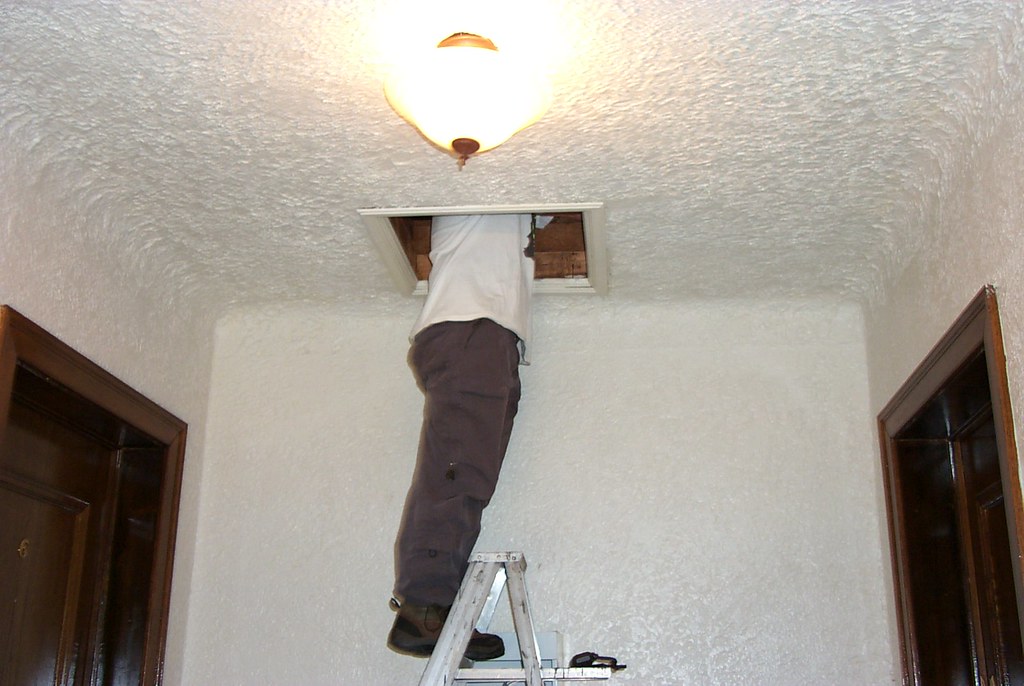
Photo: "Dave, our home inspector, disappearing into the attic" by Peter Burka, CC BY-SA 2.0, via Flickr.
Key takeaways
- An inspection covers the whole house: the rooms you live in, the attic, the garage, the crawlspace, and the full outside shell.
- The inspector reads sign, not sightings: droppings, gnaw marks, rub marks, runways, and nesting, and traces each one back toward the opening it came from.
- Droppings name the animal, and their size points the search: rat sign means bigger gaps, mouse sign means gaps as small as a quarter inch.
- You finish with photos of what was found and an estimate that lists the openings to be sealed, so the work is visible before you agree to it.
- The inspection does not include the work itself. Sealing, clean-up, and trapping are separate steps. Any area that cannot be reached safely is named as unchecked, not guessed at.
It starts with what you have seen and heard
The visit opens with your account: where the noises come from, what time of night they happen, which room you are in when you hear them, and any droppings or damage you have already found. Sound travels along framing, so a rat on a top plate can sound like it is over the bed when it is two rooms away. Your description points the first checks at the right space instead of the loudest one.
The rooms you live in
Inside, the check starts where rodents feed and travel: behind and under kitchen cabinets, around sink plumbing, behind the stove and refrigerator, along the pipe and wire runs that pass through floors and walls, and through pantries and utility areas. The garage gets the same pass: the door seal and its corners, the wall the garage shares with the house, and stored boxes, which can hold old droppings for years and look current at a glance. Mouse sign shows up small and low, at cabinet, pipe, and baseboard level.
Hearing scratching? Finding droppings?
Let's find out how they're getting in.
An entry-point inspection checks the common ways rats and mice get in, shows you what we find, and tells you what needs to be sealed.
The attic and the roofline
The attic is read for trails pressed through the insulation, droppings lined along the tops of joists, nesting in the insulation, and gnawed wiring and ducting. Then the openings: chewed corners on vent screens, daylight showing at roof-to-wall junctions, gaps around pipe penetrations, and the hatch itself. Most rodents here get in from above, so the roofline gets checked from the attic side and the ground side.
The crawlspace
The crawlspace is checked on every inspection. Down there the read is runways wiped clean in the dust, rub marks on joists and the mudsill, droppings, disturbed insulation, and the foundation vents. Entry points found in the crawlspace get sealed, as long as the ground has not been tunneled. A crawlspace typically cannot be cleaned the way an attic can. If tunneling has undermined the ground under the foundation, the fix is a rat slab, and Integrity refers that work out.
The full outside shell
The outside walk follows the foundation line, the siding and trim, porch and step junctions, and every utility entry: gas, water, electric, cable, and air conditioning lines. Roof edges, eaves, and vents get checked from the ground. So do the conditions that shelter rodents against the house: overgrowth on the foundation, stored items that give cover, and branches touching the roof. Those conditions go in the findings. Clearing them is homeowner work, and it matters, because a sealed house next to good cover stays under pressure.
Reading the sign back to the openings
Fresh and dark or old and dusty, droppings say whether the activity is current. Concentrated droppings in one corner usually mark a nesting area; scattered droppings point to an older route. Rub marks show the paths traveled nightly. Gnaw marks show where rodents are working to get through. The inspection connects them: sign in a room, a runway behind it, and an opening at the end of the run. Sign with no opening found yet means the search is not finished.
What you get at the end
You get the findings explained, photos of the entry points and activity areas, and an estimate that lists the openings we plan to seal, so you can see the work before you agree to it. The inspection also becomes a report and map our crew works from, so the job matches the findings you saw. If nothing is found, that is a result too: the findings record what was checked. The inspection is free.
What an inspection does not cover
An inspection is not the work. No sealing, clean-up, or trapping happens on the inspection visit; those steps follow once you agree to the estimate: seal the openings first, clean and sanitize at the same visit, trap what is still inside, then follow-up checks until there are no more signs of activity. It is also not a look at everything. Areas that cannot be reached safely, a hatch blocked by storage or an attic section with no safe footing, are named as unchecked rather than assumed clean. And it covers rats and mice: a skunk under the house or a raccoon in the attic is a different problem and a different call.
Rodent work in our service area
Common questions
What does a rodent inspection include?+
A check of the rooms you live in, the attic, the garage, the crawlspace, and the full outside of the home, looking for droppings, gnaw marks, rub marks, runways, and nesting, and for the openings rodents use. It ends with the findings explained, photos of what was found, and an estimate that lists the openings to be sealed.
Do you check the attic and crawlspace, or just the outside?+
Both, on every inspection, where they can be safely reached. Most entry points sit at the roofline or below the floor, so an outside-only look misses the two spaces where the answer usually is. Anything that cannot be reached safely goes in the findings as unchecked.
How can you tell if rodent activity is current or old?+
Fresh droppings are dark and soft; old ones are dusty, faded, and crumble. Concentrated sign in one spot usually means current nesting, while thin, scattered sign usually means an older route. The inspector reads the sign together rather than calling it from one dropping.
Will you show me the entry points you find?+
Yes. You see the openings themselves or photos of them, and the estimate lists each one we plan to seal.
Does the inspection include any trapping or sealing?+
No. The inspection visit is for checking and documenting. Sealing, clean-up, and trapping are the work that follows, in that order, once you have read the findings and agreed to the estimate.
Written by
The Integrity Rodent Proofing team
Dixon, California. Rodent-proofing specialists serving homes across Solano, Yolo, Sacramento, Napa and Placer counties. We find how rats and mice are getting in, explain what we find, and seal the openings.