
By Integrity Rodent Proofing, Dixon, California. Updated October 2026
Key takeaways
- Rats use tile edges and transitions, not the middle of the tile field
- Coves, eaves, and roof-to-wall junctions are the top suspects
- Tile breaks easily, so the repair has to be done carefully
- Look beyond the first visible gap and check the surrounding roof area
Where rats enter around a tile roof
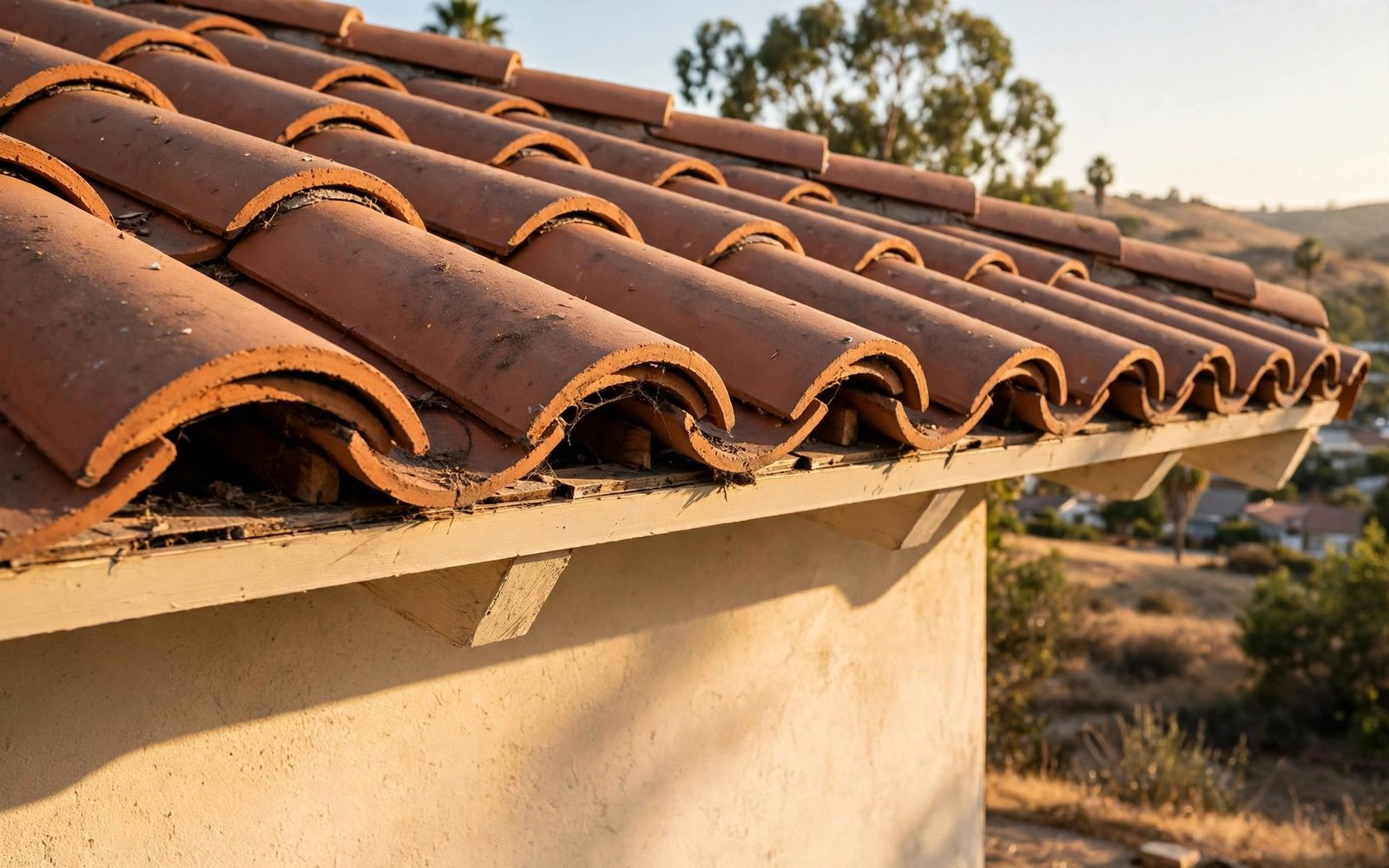
The weak spots are where tile meets something else: flashing, walls, vents, eaves. Barrel and S-tile profiles leave natural channels underneath, and where they meet an eave or a wall, the gaps can be generous. From the ground they are nearly invisible.
Roof coves and open eaves deserve a close look
Open coves and eave edges are among the most consistent rat entries on tile roofs. Roof rats probe these edges until something gives, and once one rat uses a cove, others follow. Eave closures or properly fitted screening take the easy path away.
Hearing scratching? Finding droppings?
Let's find out how they're getting in.
An entry-point inspection checks the common ways rats and mice get in, shows you what we find, and tells you what needs to be sealed.
Roof-to-wall transitions and flashing
Where a tile roof meets a second-story wall, dormer, or chimney, the flashing creates seams that shift and open over time. Check those junctions, plus pipe flashings and vent penetrations. The gaps hide under overlapping materials.
Why tile roof proofing needs a careful hand
Tile is brittle. Walking it wrong or prying it carelessly breaks tiles and can start leaks. The method has to fit the opening, and any lifted tile goes back the way it was found. This is work for someone who proofs tile roofs regularly.
What a tile roof inspection covers
An inspection checks the transitions, vents, and pipe penetrations that can be safely reached, then looks for rub marks and droppings. The goal is every opening around that roof area, not the first obvious gap.
Common questions
Do rats chew through roof tiles to get in?+
They rarely need to. The channels and gaps where tile meets eaves, walls, flashing, and vents are already there.
Will proofing work damage my tile roof or cause leaks?+
Not when done by someone who works on tile regularly. Tiles are lifted carefully and reset as found.
How often should a tile roof be checked for rodent entry?+
Once a year, and after any major storm. Flashing shifts over time, so new gaps open up.
Written by
The Integrity Rodent Proofing team
Dixon, California. Rodent-proofing specialists serving Dixon, Davis, Woodland, Winters, Vacaville, West Sacramento, Sacramento, Roseville, and Folsom. We find how rats and mice are getting in, explain what we find, and seal the openings.