
By Integrity Rodent Proofing, Dixon, California. Updated November 8, 2026
Key takeaways
- Roof rats are climbers. The signs sit high: droppings and nesting in the attic, noise overhead at night, nothing at ground level.
- They ride tree limbs, utility wires, and fences to the roof, then work the roofline for gaps.
- Roof vents, eaves, and tile roof edges are the entries we find open most often.
- The fix is sealing, not poison: seal the roofline first, clean and sanitize the attic on the same visit, then trap what is still inside.
- A free inspection finds the openings and photographs them. The estimate spells out the work and the full cost.
How to tell it is roof rats
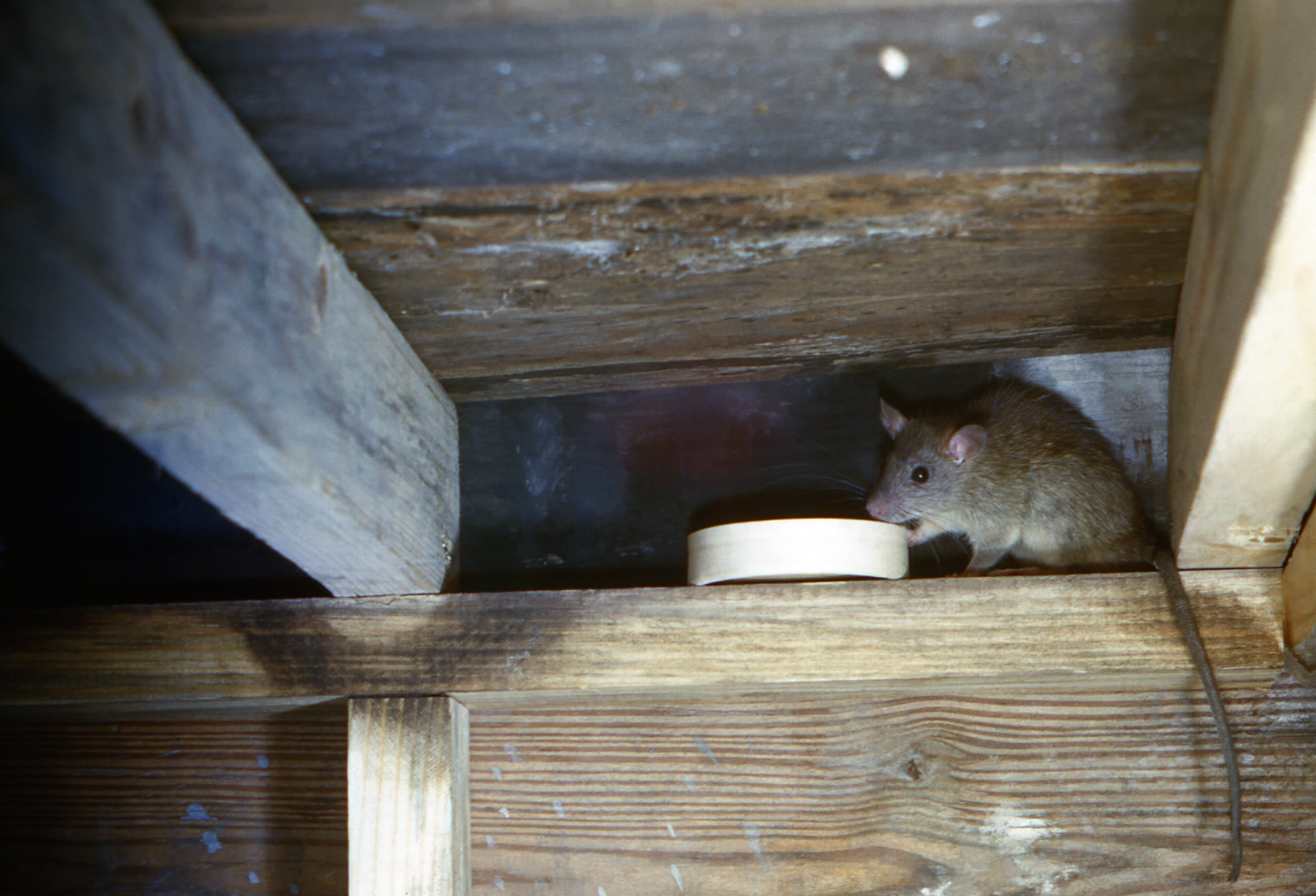
A roof rat is a slender, long-tailed rat built for climbing. In the attic we find droppings and nesting in the insulation, rub marks where the rats run along rafters and pipes, and gnaw marks on wires and stored items. From the house, the sign most people notice first is scratching or scurrying overhead after dark. Roof rats are night animals, and an attic is quiet enough that you hear them. Two animals get confused with them. Norway rats are bigger, heavier burrowers that stay at ground level; if the signs are overhead, it is not Norway rats. Mice leave the same kinds of signs in miniature, with droppings like grains of rice. Telling them apart matters because the entries are in different places. The inspection settles which animal it is before any work is quoted.
How roof rats get in
Roof rats travel above the ground. A limb hanging over the roof, a utility wire, a fence line, or ivy climbing a wall is a road that ends at your roofline. From there they probe the edges of the roof the way they have done it on every house before yours, looking for the gap that gives. The entries we find open most often are roof vents with damaged or missing screens, gaps at the eaves and roof-to-wall transitions, the open edges and ridges of tile roofs, and the holes where pipes and wires come through the roof. An opening does not have to look big. A roof rat can fit through a hole about the size of a quarter, and most of these gaps are hard to judge from the ground anyway. That is why the inspection starts on the roofline instead of in the attic: the droppings tell you rats are in, but the entries are outside.
Hearing scratching? Finding droppings?
Let's find out how they're getting in.
An entry-point inspection checks the common ways rats and mice get in, shows you what we find, and tells you what needs to be sealed.
Where we see roof rats
Roof rats follow the canopy. Where the trees are mature and the rooflines are older, we find them. Davis is the clearest case: the city's own pest page is about roof rats, and the canopy over its older neighborhoods gives them a road to nearly every roof. Davis gets its own page: our roof rats in Davis guide covers the canopy, the greenbelts, and the entries we seal there. Sacramento and Carmichael run the same way, mature oaks over older ranch and midcentury homes. Citrus Heights, Roseville, and Folsom show the same pattern in their established neighborhoods: big trees, older roofs, and signs in the attic. The smaller towns west of the river have them too. Woodland and Winters sit at the edge of orchard ground, with older homes under mature trees. Dixon and Vacaville get roof rats in the older in-town neighborhoods and anywhere fruit trees lean over a roof. West Sacramento has them along its older river-side streets, and Fairfield in its older core. The common thread is branches that reach the house and a roofline with gaps in it.
How we get roof rats out
Every job starts with a free inspection. We check the roofline, the attic, and the vents, and we take photos of the openings we find. The estimate that follows spells out the work and the full cost, so you see exactly what would be sealed and what it runs before you decide anything. The work runs in a set order. First we seal the roofline: the vents, eaves, tile edges, and penetrations, closed with construction grade materials. That sealing is the core of the job. On the same visit we clean and sanitize the attic, pulling the nesting and droppings the rats left behind. Then we trap the roof rats still inside, because a sealed house with rats in it is only half a job. Follow-up trap checks continue until the attic stays quiet. No poison is used at any step. Poison in an attic can leave dead rats in the insulation, and it never closes a single opening.
Keeping roof rats out
The yard side is yours, and it helps. Keep tree limbs trimmed back off the roof so the easy bridge is gone. Pick up fallen fruit, and harvest citrus and other fruit instead of leaving it hanging ripe. Keep ivy and heavy vines off the walls, since a roof rat climbs a vine the way it climbs a tree. What yard work cannot do is close an opening. A trimmed tree slows roof rats down; a sealed vent stops them. If the scratching comes back, or you find fresh droppings in the attic, that means an entry is open somewhere, and it is worth an inspection before the signs build up again. Our guide to how rats get into attics walks the common entries in more detail, and the tile roof entry guide covers the roof type we seal most. The fruit is often what brings them first; why rats suddenly show up in a yard is its own question, and it usually has a date on it.
Roof rat work in our service area
Common questions
How does roof rat control work without poison?+
Roof rat control starts with sealing the roofline: vents, eaves, and the gaps where pipes and wires come through, all closed with construction grade materials. Once the house is sealed, we clean and sanitize the attic on the same visit, then trap the roof rats still inside and come back for follow-up trap checks until the attic stays quiet. No poison is used at any step.
Do I need a rat exterminator for roof rats in the attic?+
A rat exterminator usually means a poison program, and poison is the wrong tool in an attic: it can leave dead rats in the insulation and it does nothing about the vents and eaves they came through. Integrity is licensed and insured, and our work starts with a free inspection and an estimate that spells out the work and the full cost. Then we seal, clean and sanitize, and trap until the house stays quiet.
How do I know if the rats in my attic are roof rats?+
Roof rats give themselves away by where the signs sit: droppings and nesting up in the attic insulation, rub marks along rafters and pipes, and scratching overhead at night. Norway rats stay at ground level, so attic activity is roof rat work in most of the homes we inspect. The free inspection confirms which animal it is before any work is quoted.
Can roof rats get in through a tile roof?+
Yes. Tile roofs are one of the most common roof rat entries we seal. The openings at the eaves, ridges, and vent penetrations let a roof rat slip straight into the attic. Sealing a tile roof means closing those edges and penetrations, not just the one hole you can see from the ground.
How fast can you inspect a home for roof rats?+
Inspections are free, and we run same-week inspections across the cities we serve. The inspection covers the roofline, attic, and vents, and you get photos of the openings we find.
Written by
The Integrity Rodent Proofing team
Dixon, California. Rodent-proofing specialists serving homes across Solano, Yolo, Sacramento, Napa and Placer counties. We find how rats and mice are getting in, explain what we find, and seal the openings.