
By Integrity Rodent Proofing, Dixon, California. Updated November 12, 2026
Key takeaways
- The signs usually show up in the house first: a sharp, sour smell near a floor register, scratching low instead of overhead, and a room that runs colder than it used to.
- Under the house, the evidence is droppings along the runs, pulled-down insulation, rub marks on the joists, and burrow holes at the foundation.
- The crawlspace rat is a Norway rat: a ground animal that burrows and works the base of the house, not the roofline.
- Crawlspaces get checked on the inspection, and the entry points get sealed. A crawlspace usually cannot be cleaned the way an attic can.
- Where rats have tunneled under the foundation, sealing the surface is not the whole fix. The real fix is a concrete rat slab, and that part gets referred out.
The signs you notice from inside the house
Most crawlspace problems get found from the living room, not from under the house. The first sign is usually a smell, sharp and sour, coming up through a floor register or from under a sink cabinet. It comes and goes, because warm air rising out of the crawlspace carries it. The second sign is sound in the wrong place. Attic rats are overhead. Crawlspace rats scratch low, under the floor or at the bottom of a wall, and the dog that keeps staring at one register is usually hearing them before you do. The third sign is a floor or a room that runs colder than it did last winter. Rats pull insulation down to nest in it, and where a batt has dropped, the floor above it loses its warmth. Droppings inside the house, under a sink or behind the range, mean the rats are already past the crawlspace and into the floor.
What the signs look like under the house
Under the house, the first thing you see is droppings. Norway rat droppings run about three quarters of an inch, dark, blunt at both ends, clustered along the routes the rats run and around the nest. Fresh ones are dark and soft. Old ones go gray and crumble, and a gray pile with dark ones on top is an old problem still running. Past the droppings, look at the insulation. Batts pulled down, torn open, or bunched into a corner are nesting work, and a bare stripe on the underside of the floor shows where a batt used to hang. Rub marks come next: dark, greasy smears along the joists and the top of the foundation wall, left where rats run the same route night after night. A continuous smear is a runway, and a runway leads to the opening at one end. Reading those runs is its own skill: our rat tracks and rub marks guide goes deeper on the grease lines and the tracks. Chewed wiring is the sign that changes the urgency. Rats gnaw the covering off wires under houses, and bare wire there is a fire risk. The last sign is in the ground: burrow holes at the foundation with fresh dirt at the mouth. Our rat droppings guide covers the identification itself, including how to tell fresh sign from old.
Hearing scratching? Finding droppings?
Let's find out how they're getting in.
An entry-point inspection checks the common ways rats and mice get in, shows you what we find, and tells you what needs to be sealed.
Why the crawlspace, and which rat
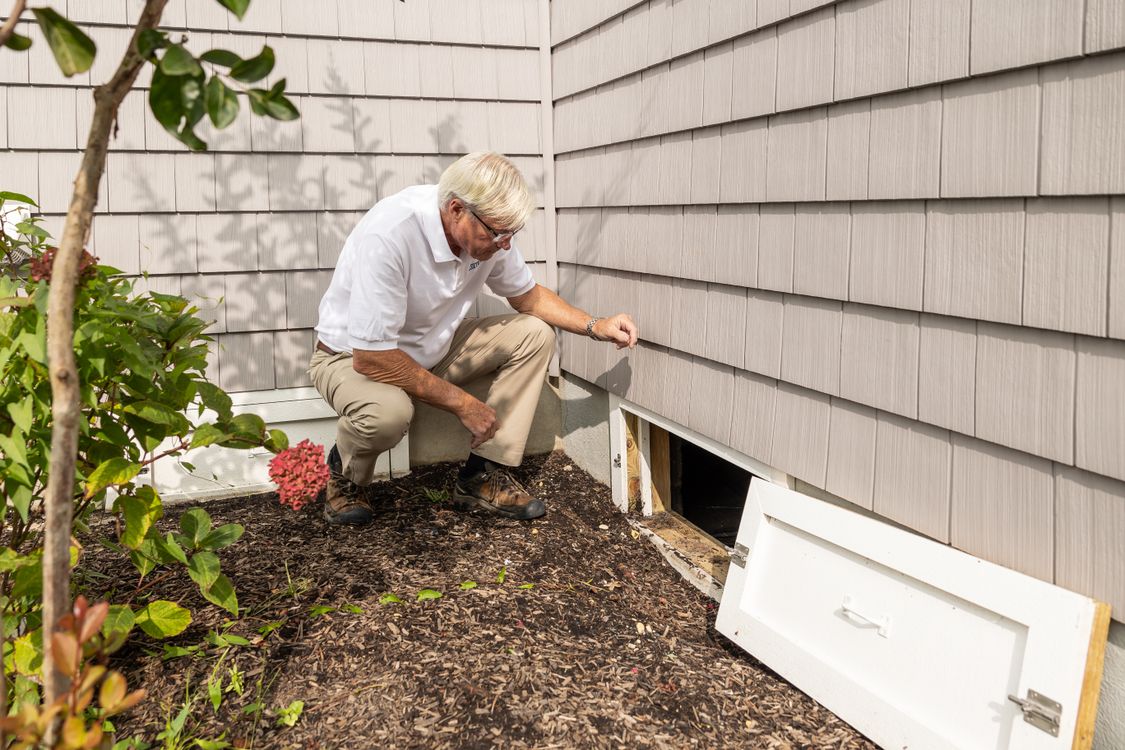
A crawlspace is the easiest part of a house to get into and the last part anyone looks at: dark, quiet, out of the weather, with bare ground below and insulation overhead to nest in. The entries are at the base of the house: foundation vents with rusted or missing screens, an access door that no longer sits flush, gaps where pipes and wires pass through the foundation. A rat needs an opening about the size of a quarter. The animal down there is the Norway rat. It stays low, it digs, and it works the foundation line, while the roof rat climbs to the attic. Low signs mean the ground animal, and its entries sit at ground level too.
What gets sealed, and what cannot be cleaned
The crawlspace gets checked on every inspection, the same as the attic, and what we find gets photographed for you. The fix starts with sealing: the vents, the access door, the pipe and wire gaps, and the foundation openings get closed with construction grade materials. Then the rats still inside get trapped, and follow-up visits continue until there are no more signs of activity. One honest difference from the attic: a crawlspace usually cannot be cleaned and sanitized the way an attic can. The space is low, much of it cannot be reached, and contaminated ground cannot be hauled out the way attic insulation can. Closing the openings is what ends it. There is one case where sealing is not the whole answer. Where rats have tunneled under the foundation, closing the surface openings leaves the tunnels in place. The real fix is a rat slab, a concrete cap poured over the tunneled ground, and that pour gets referred out. We will show you the tunneling and say so plainly.
Rat work in our service area
Common questions
What are the signs of rats in a crawlspace?+
Droppings along the runs and around the nest, insulation pulled down or torn open for nesting, dark rub marks along the joists and the foundation wall, burrow holes at the foundation, and chewed wiring. From inside the house, the early signs are a sharp smell near a floor register, scratching low instead of overhead, and a room that runs colder than it used to.
Can rats get into the house from the crawlspace?+
Yes. The same openings that let rats under the house connect upward: gaps around pipes and drain lines, duct connections, and wall spaces running up from the base of the house. Droppings under a kitchen sink or behind an appliance usually mean crawlspace rats have already found a way up.
Do you check the crawlspace on a free inspection?+
Yes. The crawlspace is checked on the inspection, along with the attic, the roofline, and the outside of the house. You get photos of what we find and an estimate naming the openings we would seal and the full cost.
Can a crawlspace be cleaned and sanitized like an attic?+
Usually not. An attic can be cleaned out because the space can be reached and the contaminated material removed. A crawlspace is low, much of it cannot be reached, and contaminated ground cannot be hauled out. The work that ends a crawlspace problem is sealing the openings and trapping the rats inside, and we will tell you plainly what can and cannot be done under your house.
What if rats have tunneled under the foundation?+
Then sealing the surface openings is not the whole fix, because the tunnels stay open underneath. The real fix is a rat slab, a concrete cap poured over the tunneled ground. We do not pour slabs, so that part gets referred out. The tunneling shows on the inspection, and we will show you what we found.
Written by
The Integrity Rodent Proofing team
Dixon, California. Rodent-proofing specialists serving homes across Solano, Yolo, Sacramento, Napa and Placer counties. We find how rats and mice are getting in, explain what we find, and seal the openings.