
By Integrity Rodent Proofing, Dixon, California. Updated November 14, 2026
Key takeaways
- The heavy work lands at one visit: the openings get sealed, and the clean-up and sanitation happen at the same visit.
- Trapping runs after the sealing. The rodents still inside are in a closed house, and traps set on their runs take them out.
- Proofing jobs include three follow-up visits over about three weeks, and the checks continue until there are no more signs of activity.
- What stretches a job is the house, not the calendar: how many openings there are, what shape the attic is in, and how long the rodents have been there.
- A timeline quoted before anyone has seen the house is a guess. The real one gets set at the inspection, from your openings and your attic.
One visit does the heavy work
The proofing visit is the big day. Every opening the inspection found gets sealed: roof vents and bonnets, eave and roofline gaps, pipe and wire penetrations, garage corners, foundation vents. The sealing is done with construction grade materials, and it is the part of the job everything else depends on. The clean-up runs at the same visit, not a later one. Droppings and nesting come out, and the areas the rodents used get sanitized. On most homes, that is the whole construction side of the job in a single working visit.
The weeks after: trapping and follow-up checks
Sealing closes the house with the rodents still inside it, so the next stage is getting them out. Traps go on the runs the rodents already use, and then the checks start. Proofing jobs include three follow-up visits over about three weeks at no additional charge. Each visit checks and resets the traps, removes anything caught, and looks the sealing work over again. The visits continue until there are no more signs of activity: no catches, no fresh droppings, no new gnawing. That ending cannot be circled on a calendar the day the work starts, because it depends on the rodents, not the crew. A small problem can go quiet fast. One that has been running all season takes the full run of checks.
Hearing scratching? Finding droppings?
Let's find out how they're getting in.
An entry-point inspection checks the common ways rats and mice get in, shows you what we find, and tells you what needs to be sealed.
What stretches the timeline
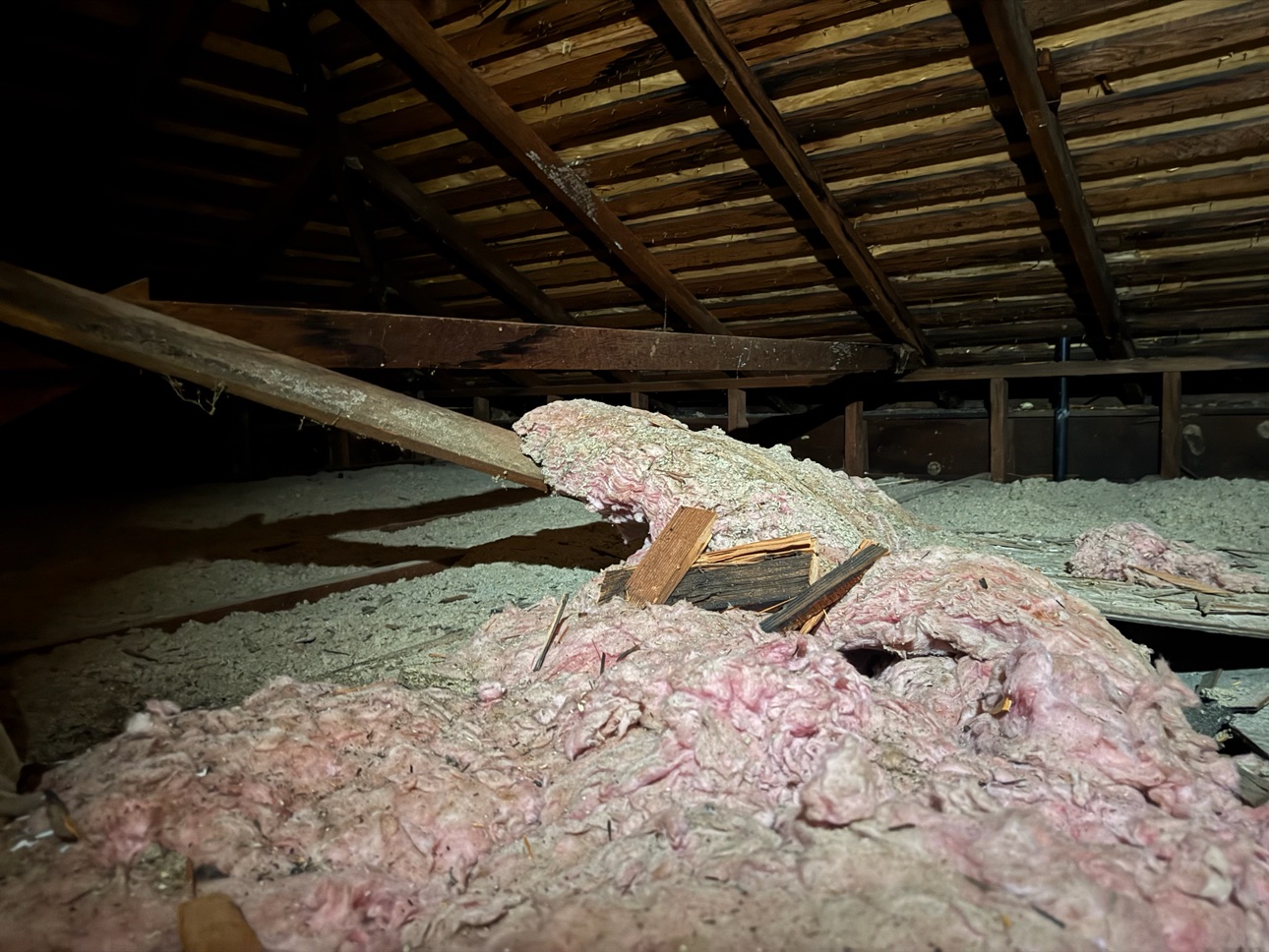
Three things decide how long a job runs. The first is the openings: how many there are, and where. A handful of vent and pipe gaps is a different visit from a roofline with openings at every return, or a tile roof with open ends along every row. The second is the attic. A spot clean where the rodents nested is same-visit work. An attic where the insulation is ruined and has to come out and be replaced is a bigger job, and the estimate says so before anyone starts. The third is time itself: how long the rodents have been in. A single animal that wandered in last week is a short job. An established colony, with nesting, runs, and young in the attic, takes the full course of trapping and checks. Where rats have tunneled under a foundation, the fix is a concrete rat slab poured over the tunneled ground. That pour is referred out, so its timing is another company's.
Why nobody honest quotes one number
Search this question and most answers say one to two days. That number counts only the sealing days, and it leaves out the part of the job that actually decides whether the problem is over: the trapping and the follow-up checks. A proofing job is finished when the signs stop, not when the crew leaves. That is why our timeline gets set at the inspection. The inspection is free. It photographs the openings, and the estimate names the work and how the follow-ups run, so the schedule you plan around is built on your house, not on an average house in a search result.
Rodent work in our service area
Common questions
How long does rodent proofing take, start to finish?+
Most of the work is front-loaded: the sealing, clean-up, and sanitation happen at the first working visit. After that, trapping and follow-up checks run about three weeks, and the job is done when there are no more signs of activity. A small problem finishes faster; one that has been going a while takes the full run.
Is the sealing really finished in one visit?+
On most homes, yes: the openings get sealed at one working visit, with the clean-up and sanitation at the same visit. If your house has an unusual number of openings, or the attic needs a full clean-out with insulation replaced, the estimate names that before the work starts, so the bigger visit is planned, not discovered.
How many times do you come back after the sealing?+
Proofing jobs include three follow-up visits over about three weeks at no additional charge. Each visit checks and resets the traps, removes anything caught, and looks over the sealing and the attic for fresh signs. If activity is still showing, the checks continue until there are no more signs of activity.
Do I need to leave the house while the work runs?+
No. The work happens on the roofline, in the attic, and around the outside of the house, and none of it uses poison. We need attic and yard access; you and your pets can be home the whole time.
What if I still hear noises during the follow-up weeks?+
Continued noise almost always traces back to one opening that was missed, usually a small one, or to a rodent still inside working the traps' runs. The check visits read the fresh signs, find where they lead, and adjust the trapping or the sealing. The job does not close while the signs are still active. And if activity shows up after the job has closed, our guide to rats coming back after proofing covers the causes and the response.
Written by
The Integrity Rodent Proofing team
Dixon, California. Rodent-proofing specialists serving homes across Solano, Yolo, Sacramento, Napa and Placer counties. We find how rats and mice are getting in, explain what we find, and seal the openings.