
By Integrity Rodent Proofing, Dixon, California. Updated November 11, 2026
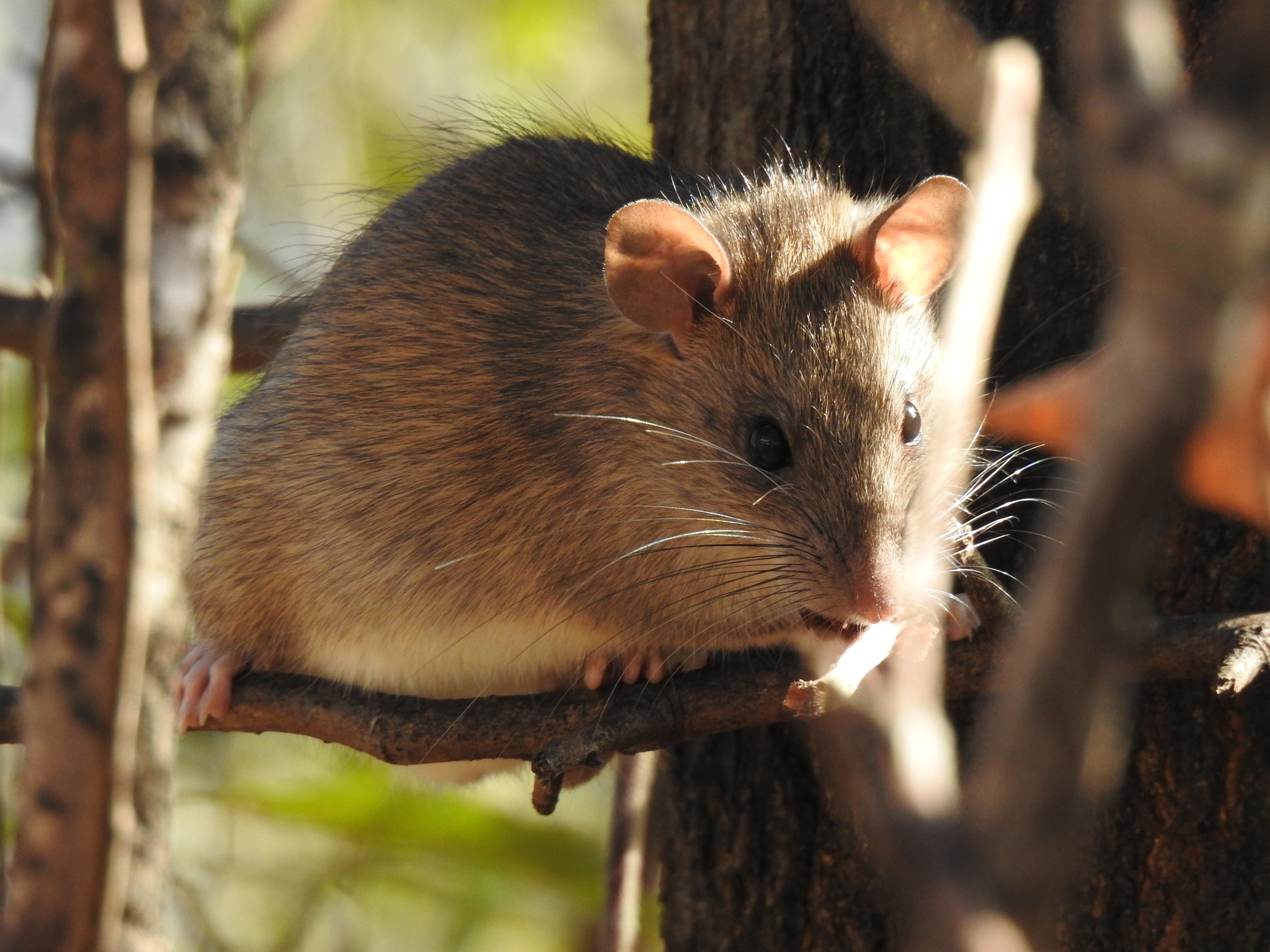
Photo by Laura Mae via iNaturalist, CC BY 4.0
Key takeaways
- The City of Davis's own pest page names the roof rat as the Davis rat, and the calls we get match it: activity in the attic, not burrows at the foundation.
- Davis hands roof rats their roads: mature street trees, greenbelts behind the neighborhoods, backyard fruit trees, and utility lines, all ending at the roofline.
- The openings are predictable: failed vent screens, gaping eaves, and the holes where wires and pipes come through the roof, on older in-town homes and out through Village Homes and Mace Ranch.
- The fix is a sealed roofline: seal first, clean and sanitize the same visit, then trap what is still inside. No poison.
- Inspections are free, with photos. In a city with this many rentals, owners and managers get the photos and the estimate, so the house gets fixed instead of serviced.
Why Davis is roof rat country
Start with what the city itself says. The City of Davis "Pests in the Home and Garden" page is built around the roof rat; it calls the roof rat the Davis rat, with the Norway rat getting one contrast paragraph. The attic animal in Davis is the roof rat. Whole neighborhoods sit under a mature canopy, and the greenbelts run behind the houses like a second street system, putting travel routes within a short run of almost every roof. Backyard fruit trees do the feeding, citrus and persimmons hanging over fences and rooflines, and the older housing stock near downtown completes it, rooflines with decades to open up at the vents and eaves. Norway rats exist here at ground level along the greenbelt edges, and the Norway rats guide covers that animal, but when a Davis call is about noise overhead, it is a roof rat until the inspection says otherwise.
Where Davis roof rats get in
A roof rat does not start at your door. It starts at the street tree whose limb hangs over your roof, the utility line that lands on your eave, the fence or vine touching the wall under the roof edge. The inspection walks those roads backward from the roof to the street, because trimming one limb does not matter if the wire still lands. Where the road meets the house, the entries are the same short list on most Davis homes: roof vents whose screens have failed or were never fitted tight, gaps where the roof meets the wall at the eaves, and openings around the pipes, vents, and wires that come through the roofline. A roof rat needs a gap about the width of a thumb, and on a roofline patched and re-roofed over the years those gaps hide in the transitions. The inspection works from the roof down, not the attic up: droppings only prove rats are in; the entries are outside, and the entries are the job.
Hearing scratching? Finding droppings?
Let's find out how they're getting in.
An entry-point inspection checks the common ways rats and mice get in, shows you what we find, and tells you what needs to be sealed.
What it looks like in a Davis home
The Davis version of this problem has a shape. Scratching or light scurrying over a bedroom ceiling at night, starting near the side of the house that backs onto a greenbelt or carries the big tree. Droppings and nesting in the attic insulation when someone goes up for the first time in years. Fruit showing chew marks, or a harvest disappearing from the outside in. In the rental homes it often arrives as a tenant's noise report that an owner across town needs documented before acting, which is why our inspections come with photos as a matter of course. Mice leave the same signs in miniature; the inspection confirms the animal and the entries.
What the City of Davis tells homeowners, and what we add
The city's pest page gives homeowners the right advice: take away the food and the roads, keep fruit picked up and trees trimmed back off the roof, and exclude the animal, seal it out, rather than reaching for poison. We agree with all of it. What the city page cannot do is the work itself. Sealing a Davis roofline means finding every vent, eave gap, and penetration the rats use, including the ones you cannot judge from the ground, and closing them with construction grade materials that hold. That is ladder and roof work, and it is the part homeowners call us for. Habitat changes slow roof rats down; a sealed roofline stops them.
How we get roof rats out of a Davis home
The Davis inspection is free, and it is built around how these rats travel. We start outside: the roofline, vents, and eaves, and the routes in from the trees, wires, and greenbelt side of the lot. Then the attic, for the signs that confirm the animal. You get photos of every opening we find, and the estimate names the openings, the work, and the full cost before you decide anything. Owners and property managers get the same package. Then the order never changes. The roofline gets sealed first, vents, eaves, and penetrations closed with construction grade materials. The attic gets cleaned and sanitized on that same visit. Trapping follows for the rats the seal caught inside, with follow-up checks until the ceiling stays quiet at night. Poison plays no part in it: a poisoned rat dies where it hides, and the vent it came through stays open for the next one.
Common questions
Why are roof rats such a problem in Davis?+
Because Davis gives a climbing rat everything it needs in one place: mature canopy and greenbelts behind most neighborhoods, fruit trees feeding right at the roofline, utility lines landing on the eaves, and older in-town rooflines opened up at the vents. The City of Davis's own pest page names the roof rat as the Davis rat, and our calls agree.
Does the City of Davis do anything about roof rats, or is it on the homeowner?+
The city's role is information: its pest page explains the animal and recommends habitat changes and exclusion. The city does not seal houses, so roof rats in a private home are the homeowner's problem to fix, and sealing the entries instead of poisoning, which is what the city recommends, is exactly the work we do.
My Davis home backs onto a greenbelt. Are roof rats coming from there?+
Very likely they are traveling from it, yes. Greenbelts are roof rat roads: cover, trees, and a quiet route passing behind house after house. You cannot seal a greenbelt, and you do not need to. Roof rats still have to land on your roofline and find a gap, and sealing your vents, eaves, and penetrations closes the last step of that road.
How fast can you inspect a Davis home for roof rats?+
Inspections are free, and we run same-week inspections in Davis. The visit covers the roofline, attic, vents, and the routes in from the trees, wires, and greenbelt side, and you get photos with an estimate that spells out the openings, the work, and the full cost. For rentals, that package goes to the owner or manager.
Do you use poison for roof rats in Davis?+
No. Poison is the wrong tool in an attic: a poisoned rat can die in the insulation where you cannot reach it, and the vents and eaves it used stay open for the next group. We seal the roofline first, clean and sanitize the attic on the same visit, then trap what is still inside.
Written by
The Integrity Rodent Proofing team
Dixon, California. Rodent-proofing specialists serving homes across Solano, Yolo, Sacramento, Napa and Placer counties. We find how rats and mice are getting in, explain what we find, and seal the openings.